William Hill
Reducing Frontline Compliance Risk in a Regulated Retail Environment
A service and behaviour design case study within a UK betting operator
Service Design
Product Strategy
The Challenge
William Hill operates thousands of retail betting shops across the UK, within one of the most tightly regulated consumer environments.
The work took place within live retail operations, involving frontline staff, shop managers, and regional leadership, where compliance tasks must be completed consistently across shifts to meet regulatory and safeguarding requirements.
Note: Some details have been abstracted for confidentiality.
The Challenge
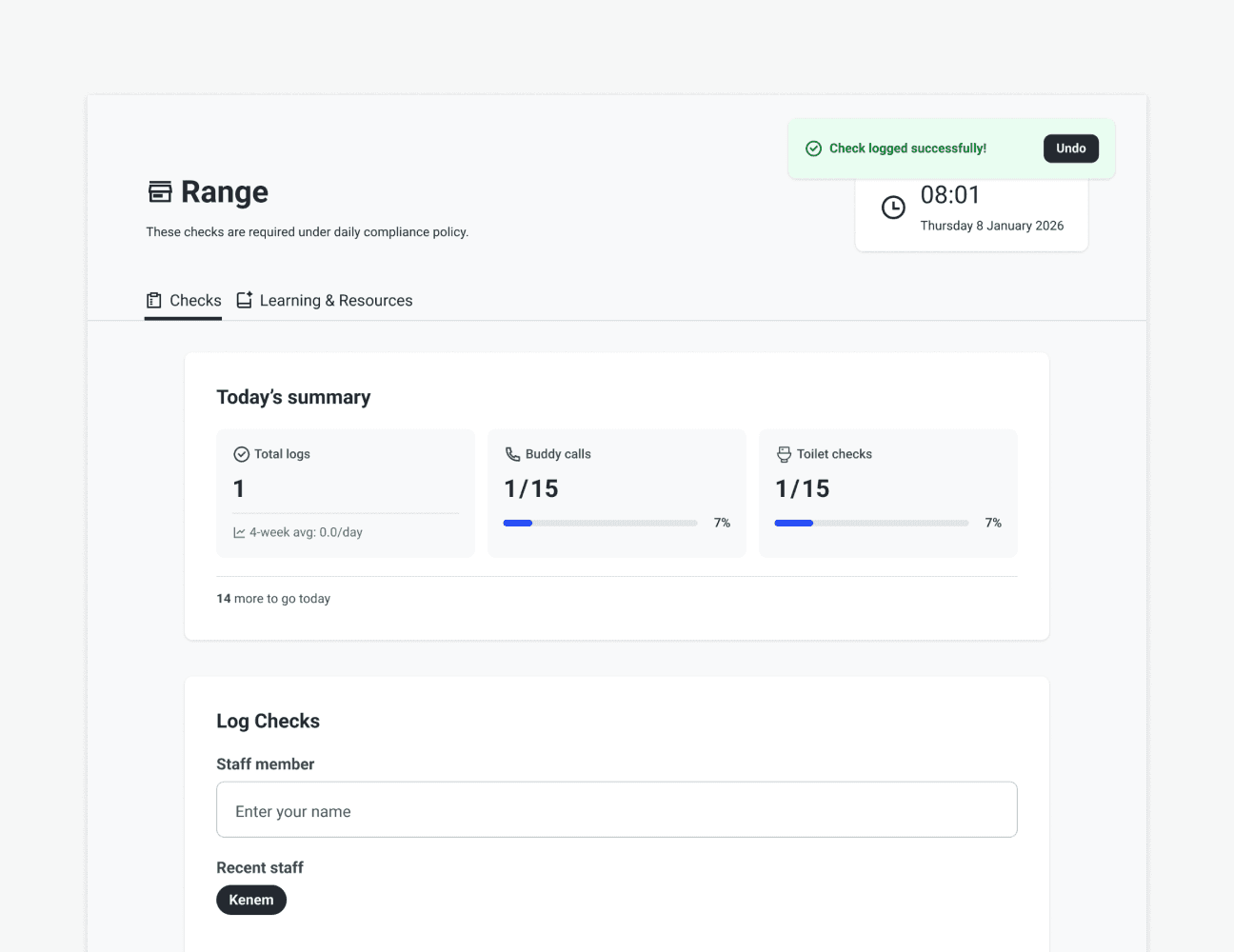
Frontline compliance tasks were inconsistently executed across shifts, creating operational risk and exposing gaps between policy intent and day-to-day practice.
While procedures were clearly defined at an organisational level, execution relied heavily on:
Manual handovers
Fragmented digital tools
Individual memory and diligence
This resulted in:
Missed or delayed checks
Poor visibility of accountability
Reputational and regulatory risk in a high-scrutiny environment
The core challenge was not awareness, but behavioural reliability at scale.
The Approach
Rather than treating this as a tooling or training issue, the problem was reframed as a service and behaviour design challenge.
I analysed the end-to-end frontline service journey, focusing on:
How compliance tasks fit into real shift patterns
Where cognitive load and ambiguity surfaced
How responsibility diffused across roles and handovers
This included:
Observing live operational workflows
Mapping the service ecosystem across people, tools, and policies
Identifying breakdowns between frontstage action and backstage systems
Insights were synthesised to reveal that compliance failures clustered around transitions, shift changes, lone working, and unclear ownership, rather than lack of intent.
The Impact
The work produced a clear, service-level view of compliance execution, shifting the conversation from individual performance to system design.
Key outputs included:
A concise service blueprint highlighting friction points and risk moments
Experience-led improvement opportunities focused on clarity, accountability, and behavioural cues
Practical design recommendations (e.g. explicit lone-working signals, clearer task ownership indicators)
Findings were:
Shared with area management
Discussed with senior stakeholders
Presented for further exploration within Product & Technology forums, opening the door for cross-functional implementation
©2026 Kenem White